
As temperatures rise and families head to pools, lakes, beaches, and rivers, now is the perfect time to review a few simple water safety practices that can help prevent accidents and save lives.
Drowning can happen quickly and quietly, often without the splashing or cries for help people expect. Children and teens are at the greatest risk, making active adult supervision one of the most important safety measures.
Water Safety Starts with You
Whether you're swimming, boating, or spending time near the water, remember these important safety tips:
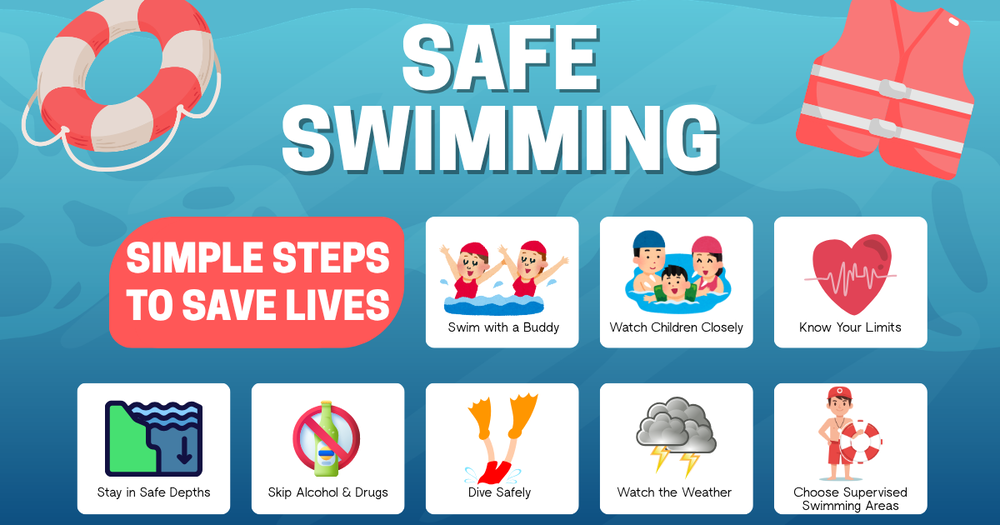
Never swim alone. Always swim with a buddy and keep an eye on each other.
Watch children closely. Stay within arm's reach of young children whenever they are in or near water—even in shallow areas.
Choose supervised swimming areas. Public beaches and pools with lifeguards are the safest places to swim.
Wear a life jacket. When boating, everyone should wear a U.S. Coast Guard-approved life jacket.
Avoid alcohol and drugs. Never swim or operate a boat while impaired.
Pay attention to weather conditions. Leave the water immediately if you hear thunder or see lightning.
Learn CPR. Knowing basic lifesaving skills can make a critical difference during an emergency.
Help Keep Everyone Healthy
Safe swimming isn't just about preventing drowning. To reduce the spread of germs:
Avoid swallowing pool or lake water.
Rinse off before and after swimming.
Stay out of the water if you're sick or have open wounds.
Take children on regular bathroom breaks and never allow peeing or pooping in the water.
Learn More
We encourage all families to take a few minutes to review the New York State Department of Health's Safe Swimming Tips for Everyone resource. It includes additional guidance on drowning prevention, boating safety, and keeping children safe around water.
View the full resource here.